

Residential Design and Artificial Intelligence
An exploration into the capabilities of ChatGPT
2026
Homes are human. They were created to answer our most primal instincts for shelter, emotional security, and social connection. As reflections of current lifestyles, homes are time capsules that capture an era.
Residential design is also human. It considers real behaviors and emotional preferences, and relies on sensory reactions.
Technology has evolved with us, to answer our emerging questions with broadening precision, at ever-increasing speed.
My process and that of ChatGPT is the same; we both receive information and produce results based on input.
Is it my competition??
This study explores the capacity of ChatGPT with regard to a whole-home interior update.
The Laboratory
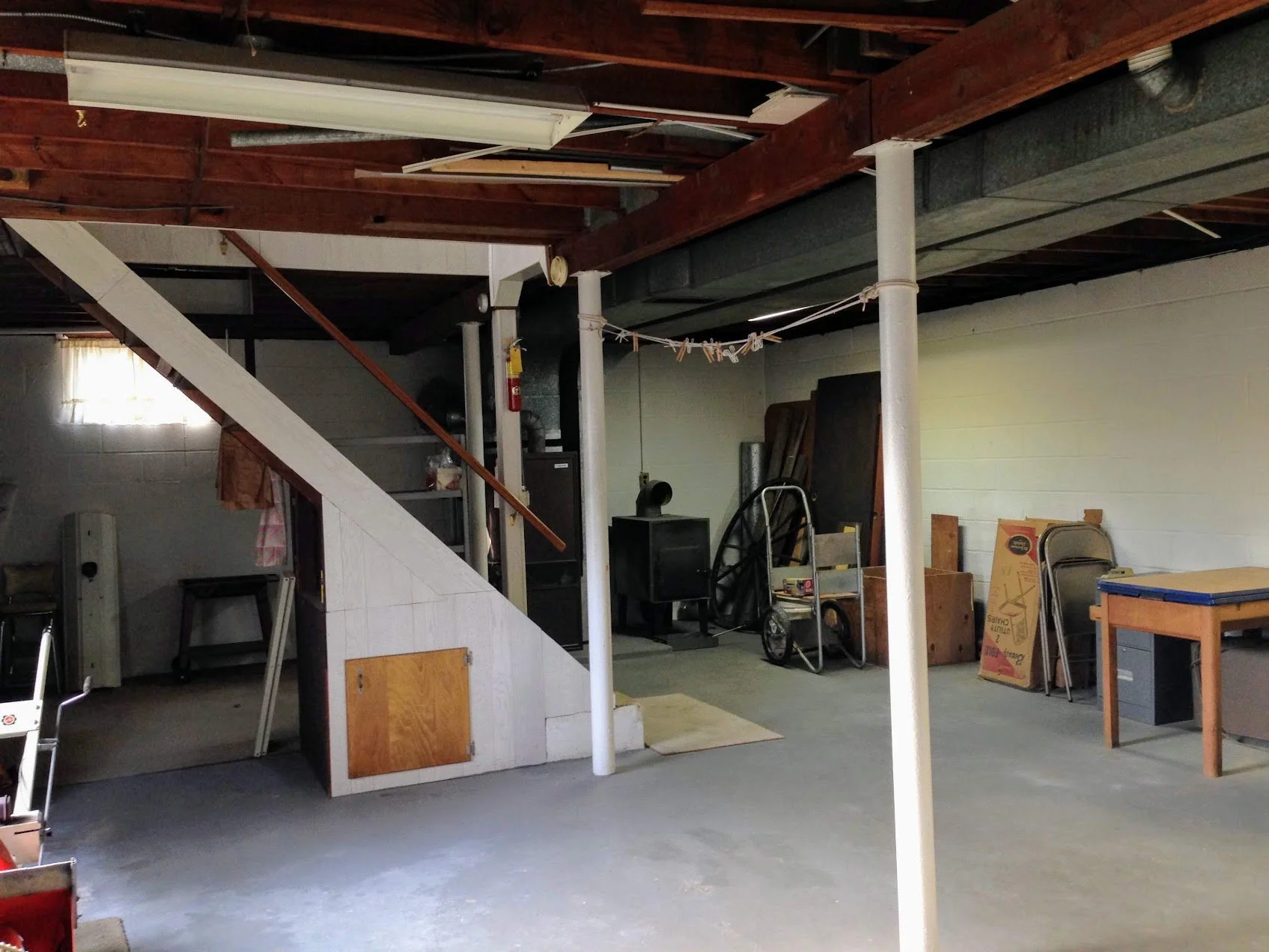
2014
My house, originally 996 square feet, was built in 1956 with a small living room, dining room, and kitchen, separated by walls and bounded by an 8' ceiling.
The lower level was unfinished.
Envisioning a new design in that era was a mostly mortal exercise using paper and pencil.
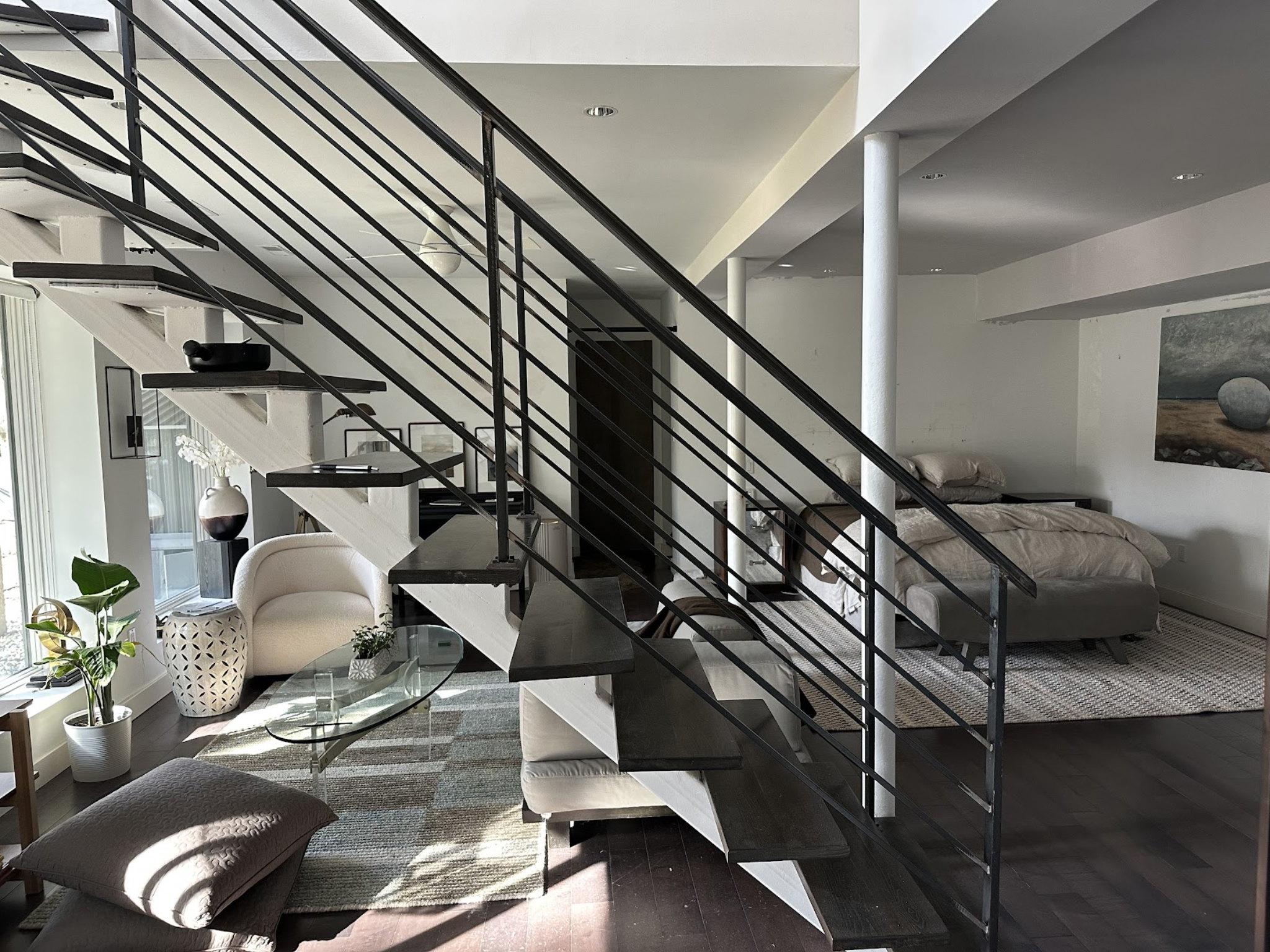
2026
The 2014 renovation addressed many structural issues, but twelve years later, the dark wood floors showed wear.
They have solid maple tops, and I bought them at a bargain price online, always intending to refinish them.
The time had come, and it was a great opportunity for to test technology.
Scope of Study
Alongside the floors, the vaulted ceilings had developed stress cracks and the walls showed years of cooking and fireplace use. With the house empty, a proper paint job made perfect sense.
And then the drapery came down and I noticed how stained it had become. Remember The Cat in the Hat???
The chandelier had bulbs out I couldn’t replace and the dining table and plastic chairs were intended as temporary placeholders back in 2014. Downstairs, it was time to finally decide on a bed. Why not tack on nightstands, a couple of rugs, and bedding while I was at it?
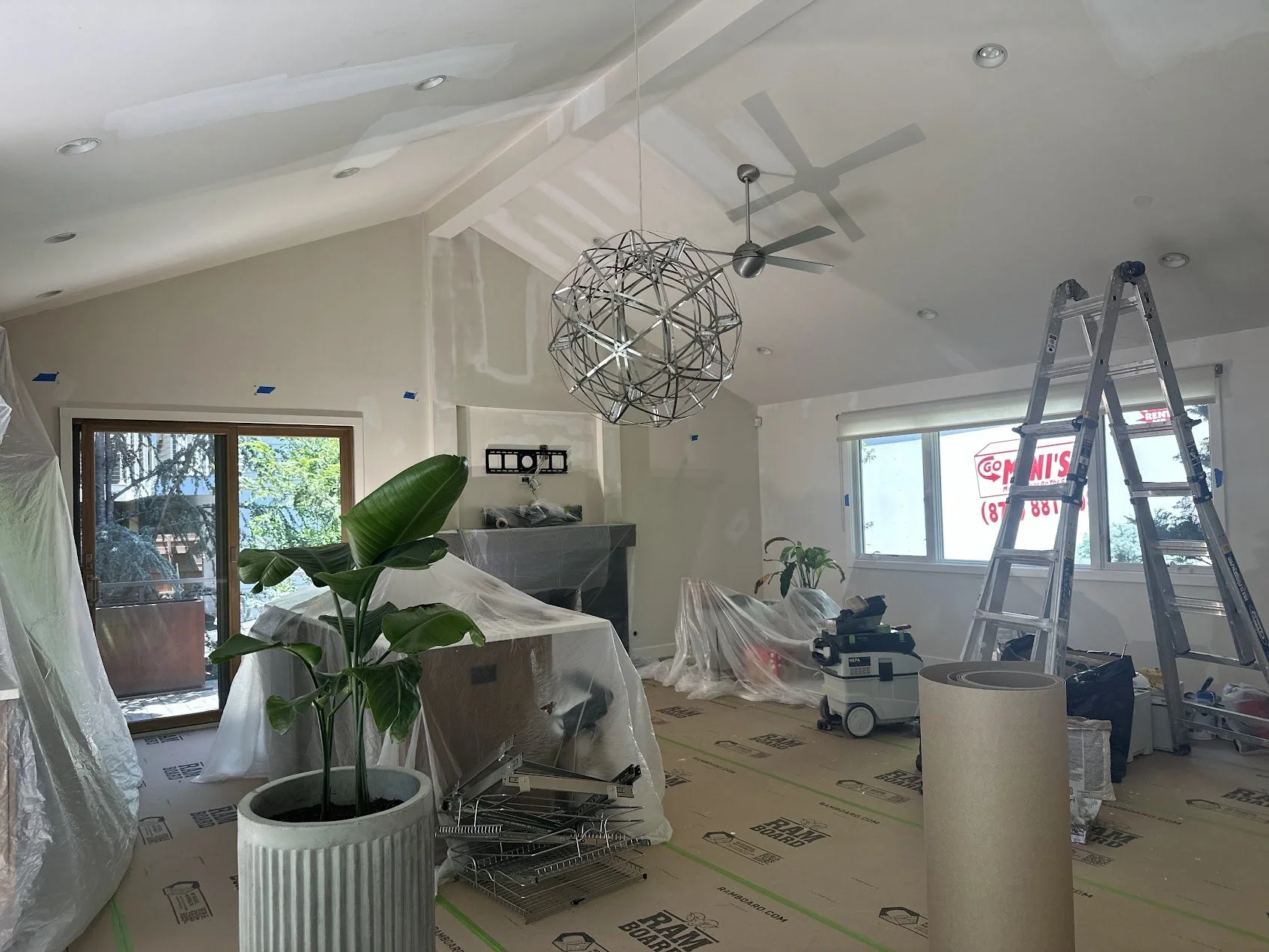
For the first time, I began to think about my home as a single entity that I move through.
I started to consider where to place visual weight, how to define zones, where to leave open space. I wanted each decision to be based on its merits and also viewed in relation to the greater composition.
I wanted to become the client, with ChatGPT as my designer. I would bring context: photographs, measurements, preferences, and goals.
ChatGPT would digest my information, help me visualize options, and present informed opinions.
Methods

The findings
Color
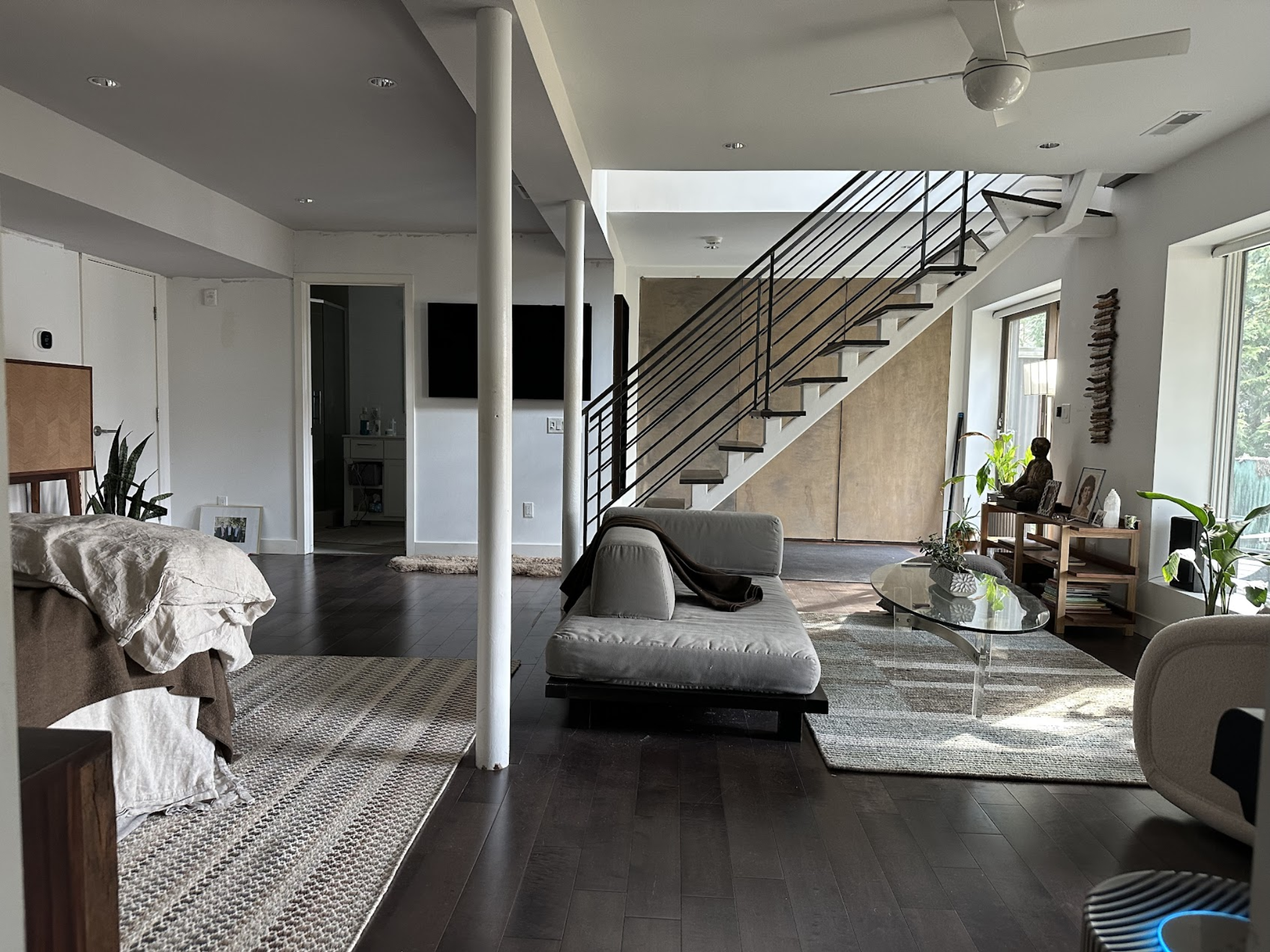
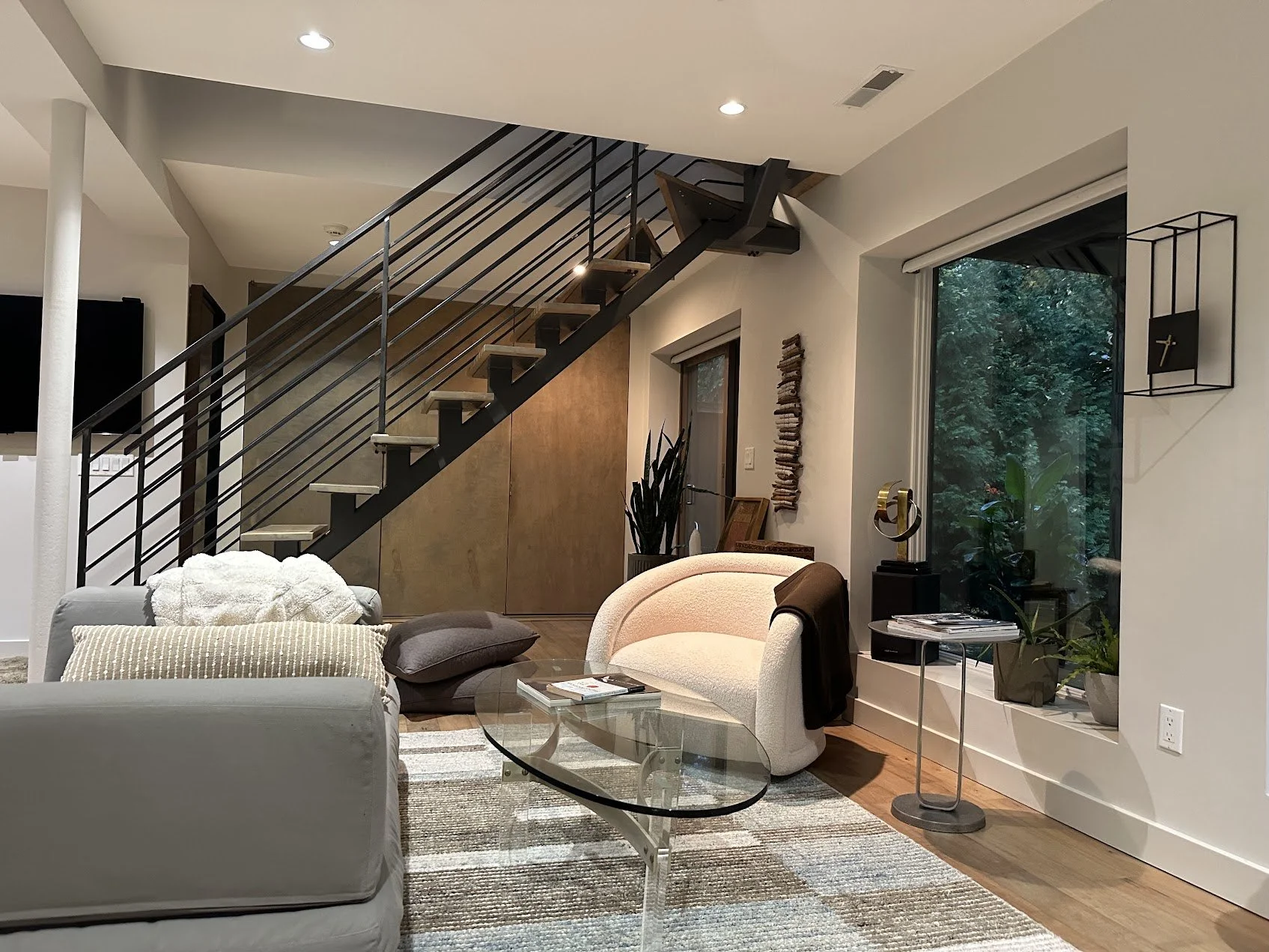
In the lower level, I had to choose color and finish for: the wood floors, the metal stair stringer and posts.
I also had to reconcile the structural projections in the walls and ceilings, and the geometry created by them.
ChatGPT helped me research paint formulas, compare undertones, and understand the subtle differences between variants.
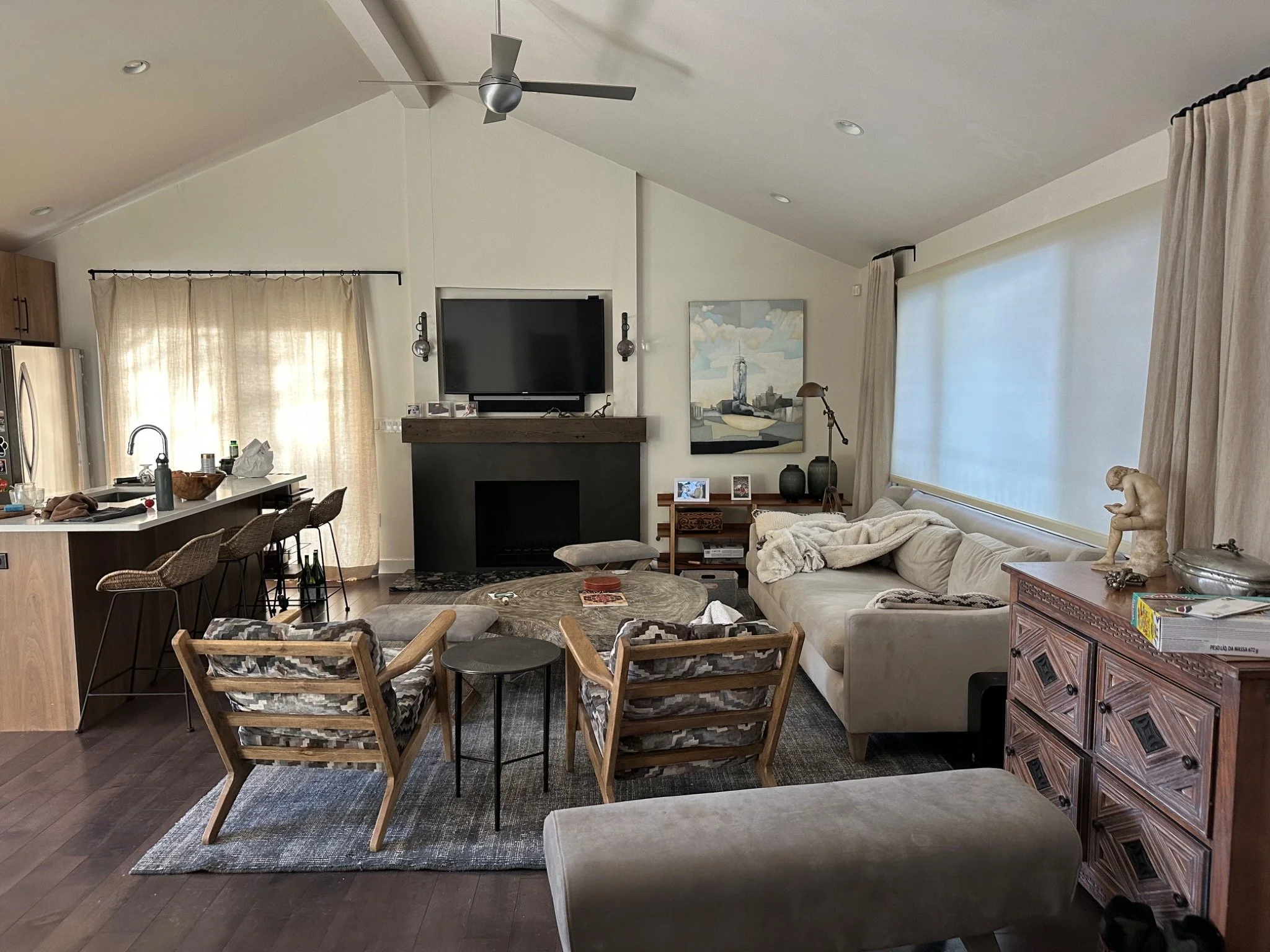
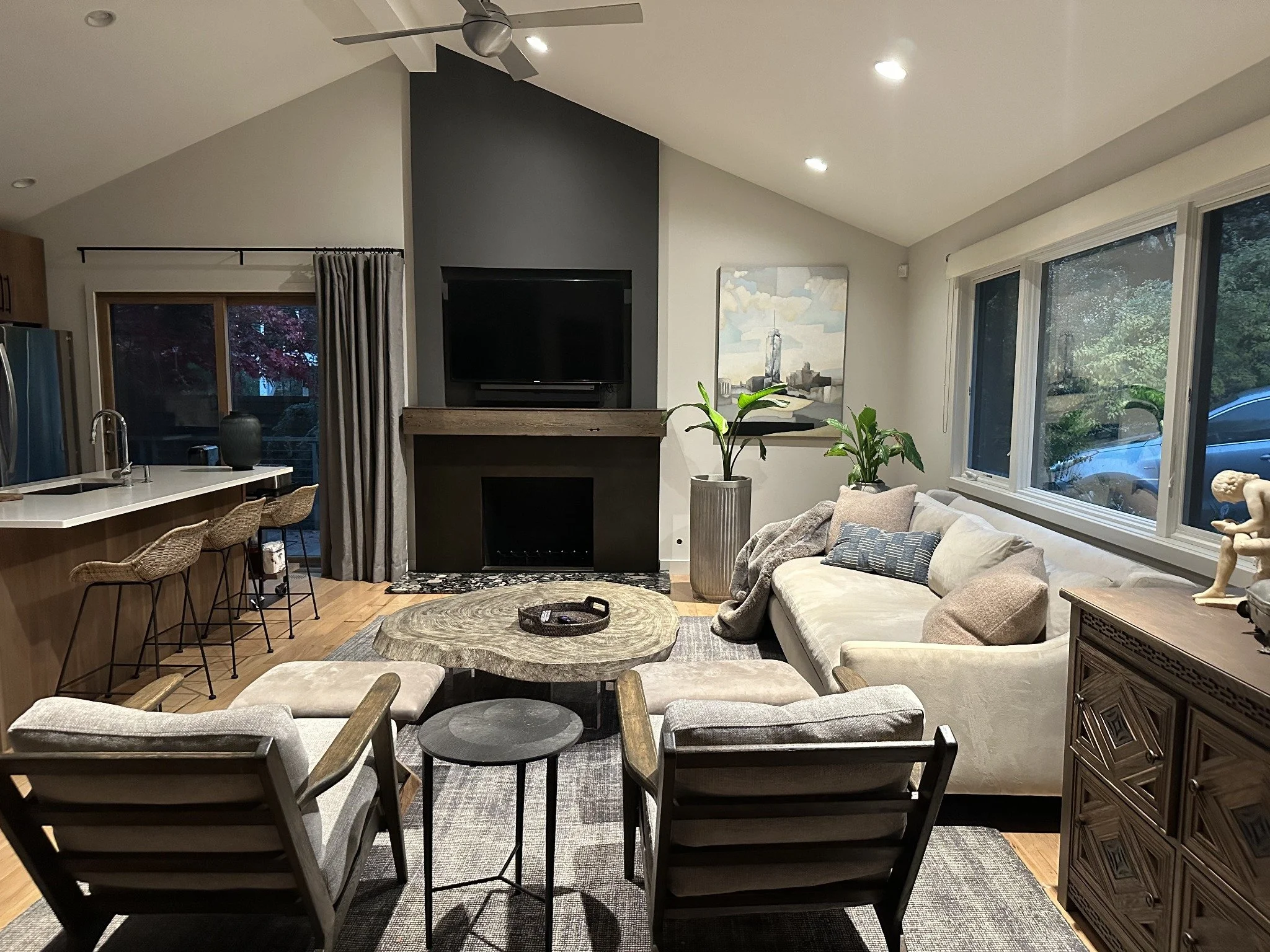
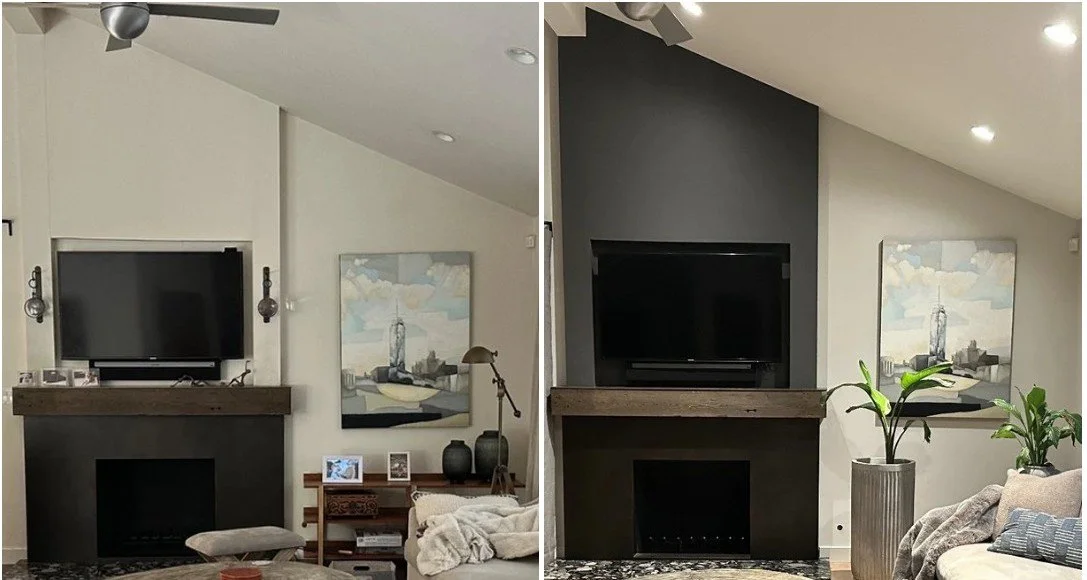
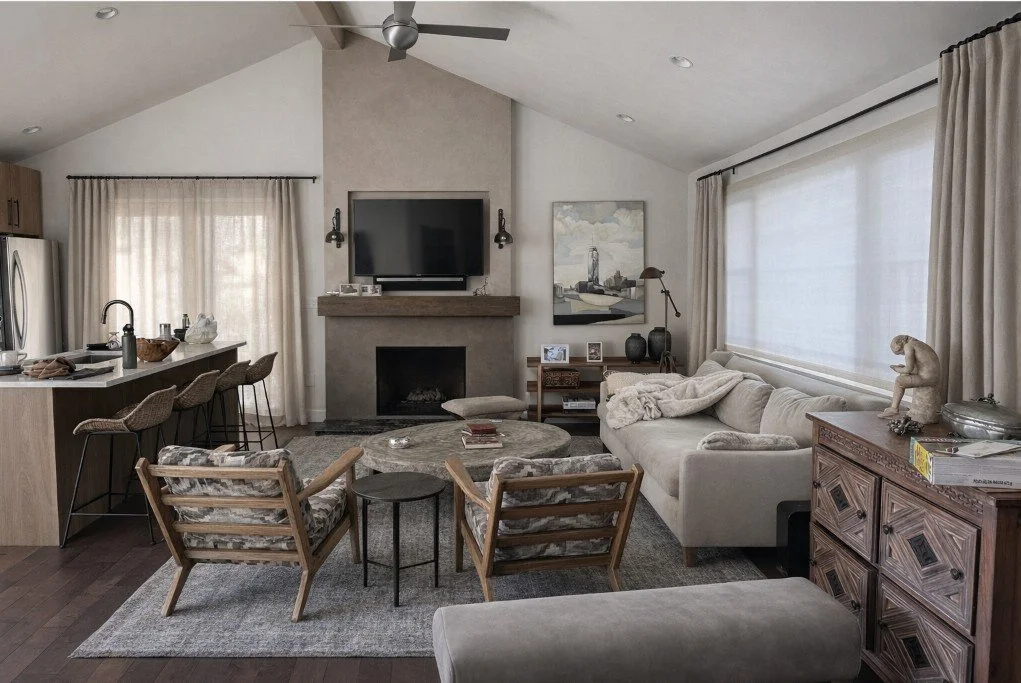
Upstairs, “she” (I mean “it”) boldly suggested painting the fireplace bump out a dark color and, after several alternative mock-ups, I agreed.
Together we examined visual weight, competing tones throughout the home. We worked out a balanced palette that included new furnishings and refinishing existing pieces.
2. Spatial Composition
From furniture and rugs to art placement, ChatGPT indulged many technical questions and helped through the mathematics of space planning.
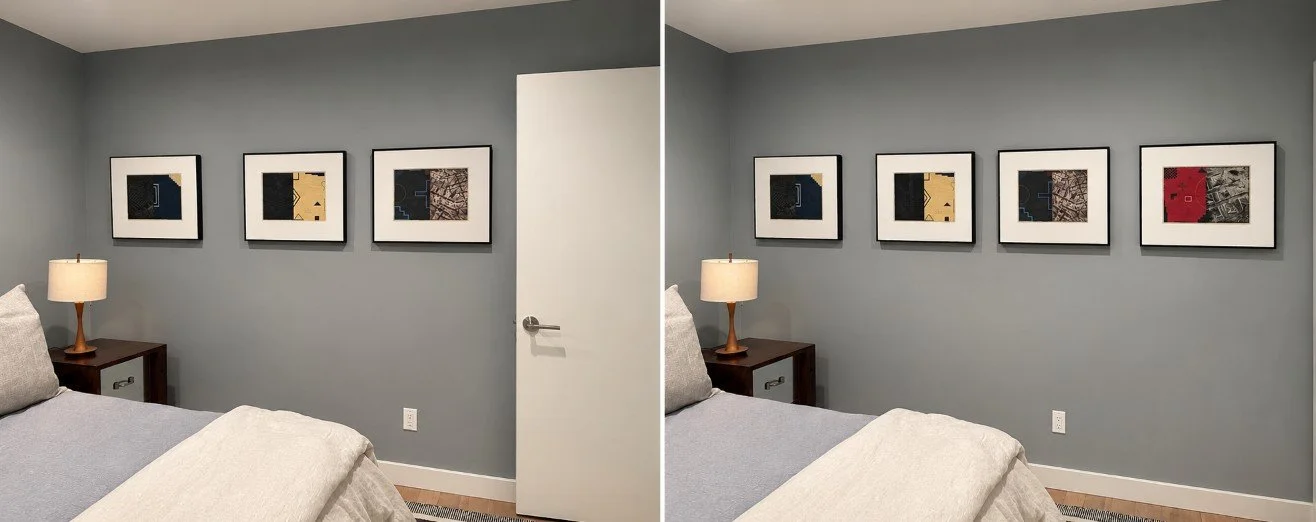
This art arrangement was designed to work with the door open and closed.
ChatGPT challenged the rectangular piece of furniture flat against the wall, next to the fireplace, and instead helped me envision a 3D composition of round objects that bring height and depth to the space while hiding the subwoofer.
3. Sourcing
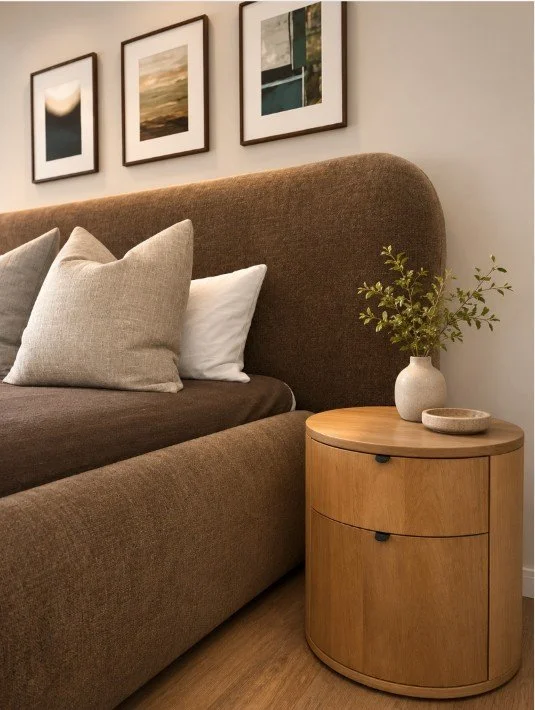
For me, finally choosing a bed involved more than its physical attributes.
I wanted something that felt substantial without overwhelming, something that softened the architecture and felt inviting.
ChatGPT and I analyzed headboard height, upholstery colors, and construction methods.
And then I stumbled upon this bed while out in the city. It’s unique - with a headboard, 15” wider than the frame on each side, elevating the queen size to the presence of a king, all while softening the long wall. I was smitten.
ChatGPT didn’t find it for me, but helped me understand what I wanted and to locate the curved nightstands from one of my preferred vendors.
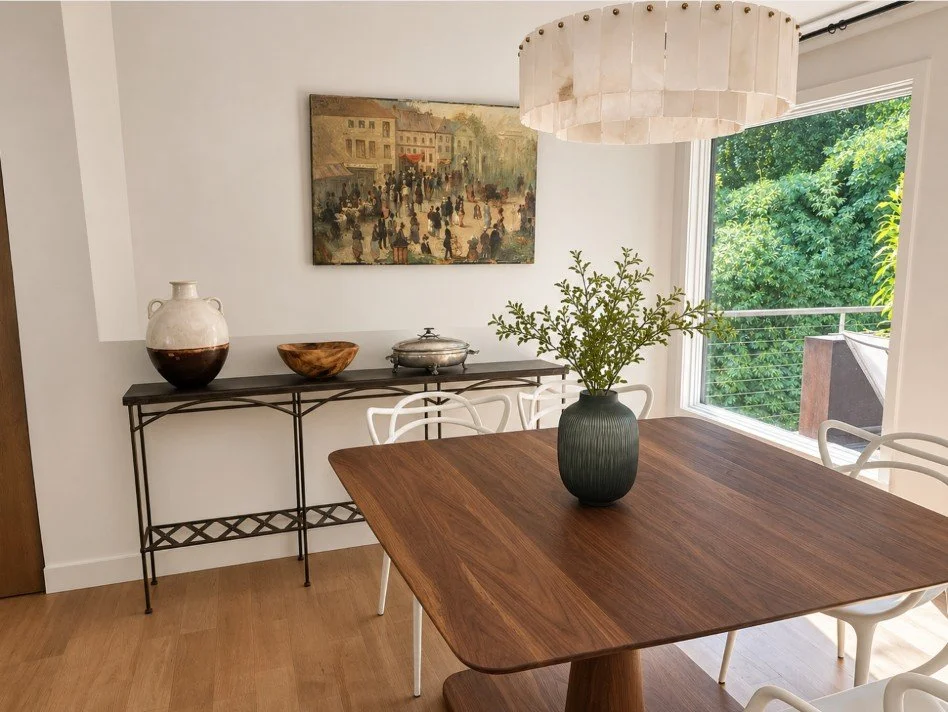
Choosing the dining table presented a different challenge as there are not many 48” square tables in solid wood readily available.
Here, Chat GPT helped me connect with a Canadian custom fabricator who has become a valuable collaborator.
4. Restoration Techniques
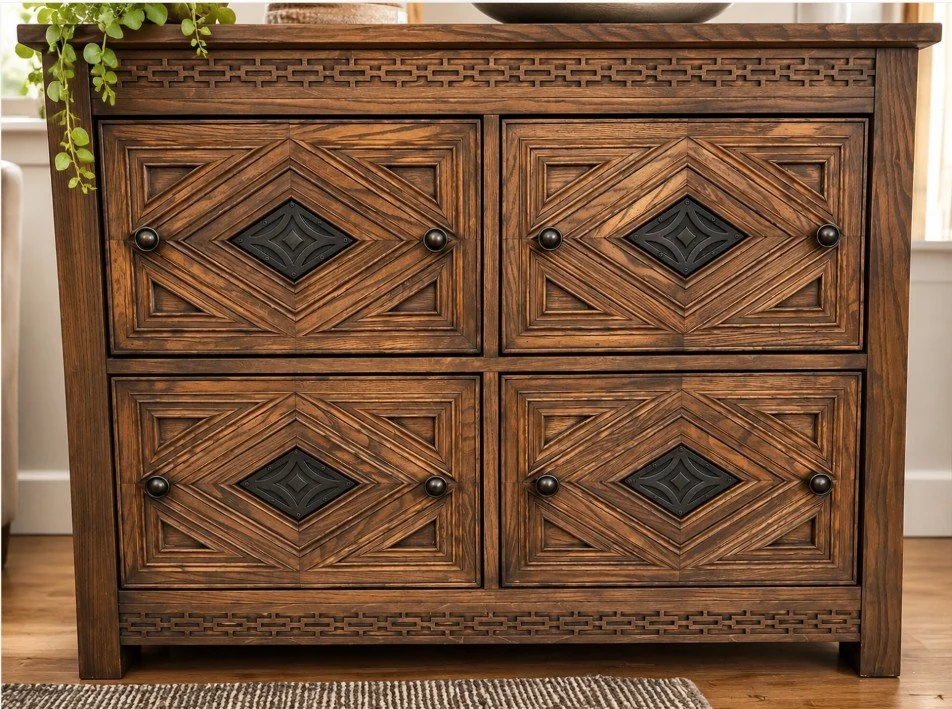
The carved chest near my front door presented an opportunity to preserve a well-made piece rather than replace it.
Initially, I was intimidated by its intricate fretwork and carved drawers. My last effort had backfired, leaving a weird milky coating.
With AI as a resource, I researched the method, stains and protective topcoats, and together we developed an approach that felt manageable.
It gave me confidence, new knowledge (and an orbital sander) to tackle this project myself.

5. Visualization
Working with AI takes time.
It forgets key facts, confounds space, tests patience.
But when it hits the spot, there is no more powerful tool for conveying possibility.
What used to cost hundreds of dollars is now included in a small monthly subscription price.
And instead of relying on pure imagination, I can see and present potential outcomes.
The lessons
This project changed how I experience space.
I’ve become more aware of detail and the impact of one decision on another.
Photorealistic renderings and simple instructions gave me new confidence to pursue ideas I may have avoided before.
But perhaps the greatest lesson comes from understanding the limits of AI.
Real life remains at the core of my work.
Technology can contribute analysis, information and imagery, but it cannot replace the human experience.
ChatGPT cannot create designs for me, but it can help me understand their impact, and it can break a tie.
I think we’ve struck a nice balance.